Showing posts with label Creativity. Show all posts

Wednesday, February 10, 2016

Hugging a Porcupine


Systems and Models is a STEAM course, in which we analyze people, systems, groups, and organizations from the inside out, outside in, and their interactions. We studied the psychological architecture within groups and people through observations and data analysis. For our first action project, we were assigned to create a self-portrait and write an artist statement. The purpose of this action project was to combine all of the information we learned about ourselves through the various psychological assessment activities and create an artistic rendering of ourselves. Our artist statement will explain our self-rendering. I experienced an artistic block, and combated it by surrounding myself with inspiration. I am proud of my artistic rendering.

Title: Hugging a Porcupine
Medium: Paper, Pen, and Pencil
Size: “6.5” inches by “9.5” inches


GN, "The Porcupine" 2016

In our class, we took a series of psychological assessments. A psychological assessment refers to a process of testing to help arrive at some hypotheses about a person and their personality, behavior or capabilities. The Myers-Briggs 16 personalities test was a major influence because it reaffirmed my beliefs in how I perceive the world and make decisions. The Myers-Briggs Type Indicator (MBTI) is an introspective self-report questionnaire that has become the golden standard of psychological assessments and a multi million dollar business because of its concept that everyone can fit into one of 16 personality types.

The MBTI reports tells you your preference for each of four pairs: Judging or Perceiving, Thinking or Feeling, Sensing or Intuition, and Extraversion or Introversion, these four preferences together make up your type. My results concluded that I was an ENTP-A (extremely, extroverted, intuitive, prospective, and thinking) personality type. This means that I am knowledgeable, energetic, argumentative, and insensitive. I am the ultimate devil’s advocate. I thrive on the process of shredding arguments for the simple reason that it's fun. My personality type can be perceived as vexing and my quarrelsome fun oftentimes inadvertently burns bridges.

In addition to the MBTI, I took several psychological assessments which reaffirmed my beliefs that I am a very direct, assertive, logical, and analytical individual. Through the Enneagram, which assesses motivations, I learned that I was an Eight (The challenger). Eights enjoy taking on challenges that gives them opportunities to exceed themselves in some way. Some famous Eights are Martin Luther King, J.r, Lyndon Johnson, and Saddam Hussein. We are motivated to be self-reliant, to prove our strength and resist weakness, to be important in my world, and to be in control of situations.

I wanted my art piece to reflect all of the qualities I was assessed with having. I did not want a cliche self portrait. Keeping the results in mind, I decided to draw a picture of a porcupine. Porcupines are small rodents with an over-abundance of attitude. I am prickly like the porcupine. According to the DiSC, an assessment tool used to improve teamwork, I am directive, assertive, confrontation, and analytical. I pay attention to the meaning of pattern of information I receive, I look at logical explanation to almost anything, and I tend to devalue the "people" (emotional) parts of situation. Porcupines have a coat of quills used against predators. My quills are my words. In our defense, our spikes are preemptive attacks to protect our own feelings. Because of our fear of vulnerability we have developed this armor. We are resourceful and fearless in the face of danger. The traits listed above are oftentimes viewed negatively and I can personally regulate the degree in which they are expressed.

We reviewed a couple of experiments such as the Marshmallow Experiment and the Stanford Prison Experiment. Me being goal-oriented was very instrumental when partaking in our class mini version of the Stanford Marshmallow Experiment. The Stanford Marshmallow Experiment was a series of studies on delayed gratification. We were offered a choice between one small, immediately reward of 1 marshmallow or 2 marshmallows if we waited for a approximately 20 minutes. I love challenging myself and waited for approximately 30 minutes.

The Stanford Prison Experiment was most intriguing to me because it showed that under certain circumstances people can be "evil". The Stanford Prison Experience was a study of the psychological implications of becoming a prisoner or prison guard. Based on the attributes accorded to me by the various assessment, if I was in a position of power such as the one designed in the Stanford Prison Experiment I would abuse such power. I am not an evil person. My characteristics are double-edge swords. As an Eight, I have to capacity to persuade others to follow in all kinds of endeavors from making peace to wagging war.

The last test we took in class was the TKI, which assesses how you deal with conflict. When dealing with conflict, my strongest strategies were competition and compromisation. My lowest score was an avoider, which means I never shy away from conflict. My results were competer (9), compromiser (8), problem solver (7), Avoider (5), and accommodator (1). I agree with these results because I have employed these conflict resolution styles in the past.

In order to glean an understanding on the art of writing artist statement, I interviewed my friend Linda, a local artist whose work has been featured in local coffee shops around the city. "An artist statement allows the artist to communicate their thought process to an audience. It is important to remember though that it isn't a space to dictate or sway your audience's viewpoint or feelings on the pieces." I kept her advice in mind during my writing process and creation of the piece. I want my piece to be left to interpretation. Everyone has a different perception of me but these perception are woven with a single thread; the Porcupine.


Work Cited:


  • Lillian Cunningham. "Myers-Briggs: Does It Pay to Know Your Type?"Washington Post. The Washington Post, 14 Dec. 2012. Web. 08 Feb. 2016. <https://www.washingtonpost.com/national/on-leadership/myers-briggs-does-it-pay-to-know-your-type/2012/12/14/eaed51ae-3fcc-11e2-bca3-aadc9b7e29c5_story.html>.
  •  "The Myers & Briggs Foundation - My MBTI® Results." The Myers & Briggs Foundation - My MBTI® Results. N.p., n.d. Web. 08 Feb. 2016. <http://www.myersbriggs.org/my-mbti-personality-type/my-mbti-results/>.
  •  "Porcupines, Porcupine Pictures, Porcupine Facts - National Geographic."National Geographic. N.p., n.d. Web. 08 Feb. 2016. <http://animals.nationalgeographic.com/animals/mammals/porcupine/>.
  • "Home." Stanford Prison Experiment. N.p., n.d. Web. 12 Feb. 2016. <http://www.prisonexp.org/>.
  •  "CPP - The People Development People." Thomas-Kilmann Conflict Mode Instrument (TKI). N.p., n.d. Web. 12 Feb. 2016. <https://www.cpp.com/products/tki/index.aspx>.
  •  JACOBA URIST. "What the Marshmallow Test Really Teaches About Self-Control." The Atlantic. Atlantic Media Company, 24 Sept. 2014. Web. 12 Feb. 2016. <http://www.theatlantic.com/health/archive/2014/09/what-the-marshmallow-test-really-teaches-about-self-control/380673/>.


Friday, January 15, 2016

Face2Face


For our final Action Project in If These Walls Could talk course, we were assigned to carry out our mural from unit 2 into a large-scale mural. Using alternative materials and artistic technique chosen from our group, we proceeded to bring the mural to life by scaling up the image to fit the mural space, create a timeline and budget to successfully carry out the mural, and installed the mural. We also documented the process and edited the content into a 2-3 minutes video. We also wrote an artist statement explaining the intended purpose of the mural and the experience of creating the mural. I enjoyed working on the stencils and stamps.


Name: GN, DC, RD, MV, JV
Title: Face 2 Face
Date: 12/2015
Measurements:
Media & Techniques: Paper, ink, spray-paint, stencilling, wheat-pasting, wheat-paste, collage and block-printing.

For this action project, we installed the mural my group members and I proposed in Unit 2. In Unit 2, we experimented with different media and artistic techniques. We created a series of 5 swatches which allowed us to visualize our mural through a variety of media and artistic techniques. Our final mural is a tribute mural to GCE’s student body. The mural is a collage of faces made from GCE students’ facial features. Each facial feature highlights individuality and the collective faces represents us communally.

The techniques and materials our group previously chose to be most effective to carrying out the final mural were mosaic and wheat-pasting. We felt that the mosaic added texture and eccentricity, and wheat-pasting helped create a realistic collage image. After much deliberation, my team and I decided to proceed to bring the mural to life through stencilling, wheat-pasting, and block-printing.

Stenciling is an artistic technique which produces an image by applying pigment to a flat surface over an object with designs in it which creates the image. Stenciling allows the pigments to reach certain parts of the surface. A stencil is the resulting image and the object used. Stenciling is cost effective, it can be reused to rapidly reproduce the same design or image, it gives the piece a simplistic look, and allows the addition of details. This technique enhances our mural by making it simplistic and sleek. The mural consists of 5 walls. Three of those walls have white, red, black and gold spray-painted lotus flowers. We were inspired by Shepard Fairey’s signature lotus designs and artistic techniques. Frank Shepard Fairey is an American contemporary street artist, activist, and graphic designers. The other two walls have a checkered pattern of white and grey wallpaper block-print.
Block-printing is one of the oldest printmaking techniques. Block-printing is essentially using a carved material covered in ink to transfer an image on to a surface. It can be done with rubber, wood and linoleum. We chose to use linoleum. We printed out our wallpaper-looking design, traced it into the linoleum, then carved the design. We carved away the parts that we didn't want to print, as the ink will be applied to the raised surfaces to print the design.

We coated the walls silver grey. Our color scheme was grey, white, black, red, orange, and gold. We wanted neutral color with pops of color and coolness hence gold. After applying the wall background to our mural, we wheat-pasted our collaged faces. Wheat-pasting is a liquid adhesive made from flour and water. It is used for arts and crafts. Our mural transforms the space into an arena. It gives the space a sense of activity.

I enjoyed my experience working on the mural. I struggled with compromising with my team mates and being under time constraints. I was the documenter, artistic director, director of operation, and mule in addition to helping my team prep for the mural. I recorded every milestone achieved by my team and made sure that my group members had all the materials needed. I also took part in the decision making processes. My favorite role was documenting. I enjoyed recording our progress which allowed me to take pride in our hard work. I have a good camera which allowed me to take clear pictures. My least favorite role was being the artist director. I didn't feel comfortable making some of the executive decision I made. I unable to visualize concepts and as an artistic director you need such a skill. I wish we had more time to work on the mural. Due to last minutes changes the mural does not look as our group had envisioned, it is much more than we had envisioned. It's so RAW!

Thursday, March 5, 2015

Whole Foods' Guitar


For our second unit of Light and Sound, we learned about Sound and how it works. We were assigned to build a guitar out of recycled materials. The purpose of this action project was to use the knowledge we acquired and to create a functional guitar. I learned how the decibel scale (a logarithmic unit of measurement measuring the amplitude of a sound wave) works. I am proud of the research I did during external investigation.

GN, Drawing 2015
The main source of sound in a guitar is the string. When plucked, the strings vibrate. The vibrations travel through the saddle to the bridge to the soundboard, vibrating the soundboard. The form of the guitar is a hollow sound box which amplifies the vibrations. The frequencies produced can depend on the string length, tension, and diameter.

To make this guitar, I used a Whole Foods plastic bowl, two pieces of wood, hard cardboard, thumb tacks, and lots of glue! I put two thumb tacks through the hard cardboard, so that the rubber bands could be attached. I placed the two wood pieces and the hard cardboard across the bowl and glued it together as the neck of the guitar.


GN, Design 2015
GN, Guitar 2015

Since I used a rubber band, there are two strings you can pluck. Each one is 17.5 inches long. One open note is a F#4, with a frequency of 370 Hz and wavelength of 93.24 cm. The octave note is a Gb5 with a frequency of 740 Hz (370X2) and wavelength of 46.62 cm (93.24/2). The octave is the half way point of my string.

The thickness of the rubber band is about 0.59 mm. I used a bowl which had a radius of 3.5 inches. The formula for the volume of a cylinder is 4/3piR^3. This formula gives the volume of a complete sphere. In order to find the volume of the bowl I had to divide the volume of the sphere by two. The volume of the sphere was 179.59438 cubic inches (4/3 X pi X 3.5^3). The volume of the bowl was 89.79719 cubic inches (179.59438/2).

You can hear my guitar below.


The Doppler Effect is a phenomenon in which there is a change in frequency of a wave for an observer moving relative to its source, because as the source moves forward the sound waves are being pushed together resulting in a higher pitch.

My guitar could illustrate this concept if a guitarist were to walk and play; as he walks forward the sound wave will be pushed together resulting in a higher pitch sound to the observer/listeners, whereas if he/she were walking away the sound waves would be more spread apart and they would sound lower.

Vocabulary terms:
- Sound waves: Sound waves are longitudinal pressure waves by which sound is propagated (Online Dictionary).
- Frequency/pitch: The frequency is the number of cycles per second past a given point. Hertz is the unit measurement used for frequency.
- Amplitude: The amplitude is the displacement of a wave from its mean value (What Is Amplitude?). It is experienced as "loudness" or volume.
- Wavelength: The wavelength is the length of one complete wave cycle.


Work Cited:

Monday, December 15, 2014

Staggering - Five Faces of Genius AP2


Five Faces of Genius is a course that allows us to explore our personal creativity and teaches us about different tools and skills that help unlock more creativity. It also gives you the tools necessary to answer the question of how creativity can help us and our community. In the second unit, we explored the Five Faces of Genius in depth and discovered our strengths and challenges with each Face. Our task was to condense what we have learned for the past few weeks about the Five Faces of Genius into chapters. We explained the Five Faces and related them to ourselves, we highlighted three geniuses and their Five Faces, and we applied our Five Faces to create two potential service projects. The purpose of this project was to learn about the Five Faces of Genius.

The Five Faces of Genius are: Seer, Observer, Alchemist, Fool, and Sage. A Seer is someone who see pictures in their mind’s eye and uses those images to lead to new ideas. A Seer navigates their imagination through visualization. Observers are sensitive to the world around them. An Observer notices the tiny details and realizes their creative significance. They make creative conclusions from their collection of facts. Observers don’t just collect and critique, they create. An Alchemist uses analogy as a way to generate to new ideas. Alchemists use different areas of interest and use what may seem dissimilar and develop a great idea from that dissimilarity. A Fool is someone who realizes that brilliant ideas lurk in the shadows of weakness. A Fool knows how to use absurdity and inverts weakness into strength. Sages use the past as a springboard for inspiration. Those who master the Sage know the wisdom of what has gone before and the power of simplicity.

According to the Five Faces survey, I seem to have very strong Observer and Seer characteristics. I disagree with the Seer assessment, because a Seer relies on the power of visualization to image creative ideas. I cannot visualize. Every time I close my eyes all I see is darkness. I can’t picture images of my family or friends in my head. And when faced with a challenge, I don’t strive to “image” a solution. I have not yet tapped the full wisdom the Sage has to offer, which was my weakest face with an 8%. I agree with the Sage assessment. I tend to complicate things and quite frankly all of the ideas are not simple ideas. They require lots of work, time and dedication. Overall, my Five Faces assessment was fairly accurate in assessing my genius traits.

I interviewed my friend AJ to determine which of the Five Faces she resembles. I think that AJ has very strong Sage characteristics. She is extremely motivated by her past. AJ finds good ideas from the past and keeps a mental record of the stories that intrigue and inspire her. I find that she is constantly asking herself what has worked in the past, and how can I rekindle it and bring it to the present with a refreshed vitality? She is an excellent storyteller, which is Sage trait. Also, I think AJ has very strong Seer characteristics. About two weeks ago, AJ came up with this idea of a doughnut museum. She instantly had a clear image of the exterior and interior design of the museum in her head. And that is exactly what a Seer does.

“History doesn’t have to be the history we learn in textbooks at school, but it can be our own past experiences”.

Selfie, AJ 2014
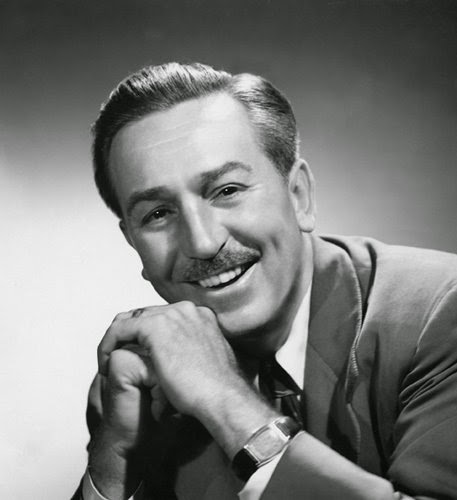
One person we studied in class was Walt Disney. "Walt Disney was an American business magnate, cartoonist, theme park designer, and filmmaker," (WIKIPEDIA). Disney co-founded The Walt Disney Company, and is regarded as a cultural icon. He is a perfect example of an Observer. It is said that Disney was inspired to create Disneyland in the park Republic of the Children located in Manuel B. Gonnet, La Plata after observing how unhappy and bored the children seemed (WIKIPEDIA). "Whenever I go on a ride, I'm always thinking of what's wrong with the thing and how it can be improved". He is also a Seer. He is a visual person considering he is a cartoonist. He envisioned the cartoon before drawing it.


"Whenever I go on a ride, I'm always thinking of what's wrong with the thing and how it can be improved".


"Walt Disney." Disney Wiki. N.p., n.d. Web. 16 Dec. 2014. 
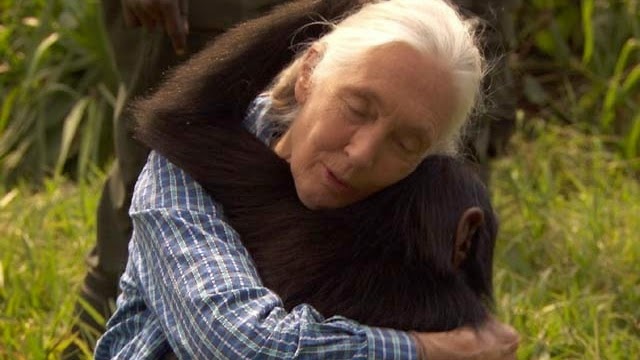
Dame Jane Morris Goodall, also known as Jane Goodall is an English primatologist, ethologist, and anthropologist. Goodall is considered to be the world's most foremost expert on chimpanzees. I think Goodall is an Observer. She is best known for a 55-year study of social and family interactions of wild chimpanzees in Gombe Stream National Park, Tanzania in which she observed chimpanzees. She is also a Fool. She began studying the Kasakela chimpanzee community in Gombe Stream National Park, Tanzania in 1960, but Goodall did not have collegiate training directing her. She was able to invert that "weakness" into a strength. Without collegiate training directing her research, Goodall observed things that strict scientific doctrines may have overlooked. She observed that each chimpanzee has unique and individual personalities, which was an unconventional idea at the time.

“I was brought up to understand Darwin's theory of evolution. I spent hours and hours in the Natural History Museum in London looking at the descriptions of how different kinds of animals had evolved, looking at the sequence of fossil bones looking gradually more and more and more and more like the modern fossil”.

Jane Goodall and Her Chimps. Watch 60 Minutes Free. N.p., n.d. Web. 18 Dec. 2014.

The Five Faces of Genius will be very helpful when designing my service project. I plan on using the Seer traits by visualizing the outcome of my project. I will also be using the Observer traits, by paying close attention to details to ensure my projects' success. As I am formulating/coming up with ideas, the Sage and Fool traits will be very helpful. I hope to come up with both simple and absurd ideas. By combining both of those faces and different elements/topics, I will be using the Alchemist face.

I combined two of my passions (Alchemist), which are CTA/trains and homelessness to create a service project. Seeing the occasional homeless person sleeping in a train car has become a common thing for any habitual CTA commuter. The CTA has tried to addressed the problem by apologizing to riders and by adding more patrollers. However, encouraging homeless people to seek shelter elsewhere is not solving the problem. It only removes them from sight. For my service project, I would like to create a train service that is homeless people friendly. This is kind of an adaptation of the Holiday Train, imagine having a special train offering shelter to the homeless. The train would route to the places with the highest homelessness percentages in the Chicagoland Area. Another service project idea I had was to have an art exhibition promoting stereotype discussions. I plan on inverting my age, which is a weakness into a strength. I want to excite people about the change a “young person or child” can do in the world (Fool).

Work Cited:


Thursday, November 13, 2014

Modeling Creatively


In my Five Faces of Genius course, we are exploring personal creativity, and learning different tools and skills that help unlock more creativity, and how creativity can help us and our community. In our first unit, we developed an appreciation for creative genius, established a range of individuals who demonstrate genius, and discussed the difference between creativity and genius. Along the way our class created a Genius Gallery, showcasing a range of people who demonstrated genius or creativity. For our first Action Project, we were asked to observe and articulate patterns of genius and creativity. The purpose of this action project was to learn the true meaning of genius. I learned a lot about creativity, and am very proud of completing this project on time.

There are several patterns in our Genius Gallery. One of the patterns is that almost all of the geniuses in our gallery are frequently in the media. This pattern does not really produce geniuses, but can someone truly be a genius if no one knows about them? People are drawn to geniuses, and want to know more about them, thus putting them in the spotlight. Some geniuses that are in the public spotlight are: Michael Jackson, J.K. Rowling, and Kanye West. Another pattern I have discovered is that most of the geniuses in our gallery come from a low income family. In my opinion, people that come from a low income family tend to work harder to break the cycle of poverty. Some examples are: J.K. Rowling, Kanye West/Jay Z, and Eminem. The last pattern I noticed was that some of these geniuses went through some type of struggles. Kurt Vonnegut for example was a prisoner of war. Jay Z grew up without a father in a housing in Brooklyn. Eminem also grew up without a father, and worked several jobs to help his mother with the bills.


Kpriss. "Naomi Campbell Endless In NUmero Russia March 2013. "StyleFrizz. N.p., 11 Mar.2013.Web. 16 Nov. 2014.
Model Naomi Campbell is another example of a powerful creative genius. No discussion of supermodels would be complete without a mention of Naomi Campbell. She breathed life into the term supermodel. Campbell is not just another pretty girl, she broke ground as the first black woman to ever appear on the cover of Time magazine and French and British Vogue (Naomi Campbell). Being a successful model requires a multitude of skills, such as creativity, perseverance, strong sense of self, self-worth, confidence and determination. Though Campbell was discovered by one of the top modeling agencies, she worked extremely hard to achieve success. She embarked on other ventures, which included an R&B-pop studio album, several acting appearances in film and television and a novel.

Models need a strong sense of self and confidence. The modeling industry is a very competitive field. There is always going to be someone thinner and prettier; therefore, you need to have a strong sense of what you bring to the table. Campbell is extremely confident in herself and exerts self-examination, an examination of one’s own behavior and motivation.

Fashion is a very creative field. Clothing designers and models are visual artists, and clothing and the body are their medium. Although Campbell has many strengths, she faced countless obstacles. She suffered from a cocaine addiction and faced multiple legal issues. Unfortunately, drug addictions come with the fame territory. "I was having fun. I was living this life of traveling the world and having people just give you anything," said Naomi Campbell. This quote just shows her strong sense of self-examination and self-identity. Also, she faced multiple legal issues all about assaults.Though she didn't use any of her strength to overcome this obstacle, she realizes that she was wrong and has apologized for it (self-examination). “I am a human, being and I make mistakes,” Naomi Campbell at a CBS interview. 

Three strengths that I possess are: determination, conscientiousness, and open-mindedness. There is creativity in being open-minded. Open-mindedness is not just the receptiveness of new ideas, it is the acknowledgement and consideration of one's view, which then leads to the evolution of one’s thoughts. And creativity is evolution. Conscientiousness is the personality trait of being careful and organized. You can be creative with the way you organize things. For example, I have used a magazine rack as a pot lid holder in my house. One challenge that I faced was doing action projects as a main mode of evaluation. Through determination, I pushed through and have gotten used to doing them. The way in which someone shows determination is a creative pursuit. A challenge that the world faces is stereotyping. I want to tap into my creative genius to find more ways to encourage people to be more open-minded like myself, as I feel this will lead to more people looking at the world in a new perceptive.
"A genius is a person who displays exceptional intellectual ability, creativity or originality, typically to a degree that is associated with the achievement of now advances in a domain of knowledge," (Wikipedia). The widely regarded genius, Albert Einstein said that creativity is intelligence having fun. Then is there creativity without intelligence and vice versa? The truth is, for the human species creativity is an instinct. If you have ever doodled on a piece of paper during a lecture, or if you have ever drawn on a window filled with condensation, then you are creative. "Don't fall into the trap of associating creativity with artistry" said Mark, an IIT student. We image, envision, and daydream, and because of these thought habits humanity/world is always evolving and changing, which is why things are never stagnant.

Works Cited: