Showing posts with label Humanities. Show all posts

Saturday, March 19, 2016

A people's history

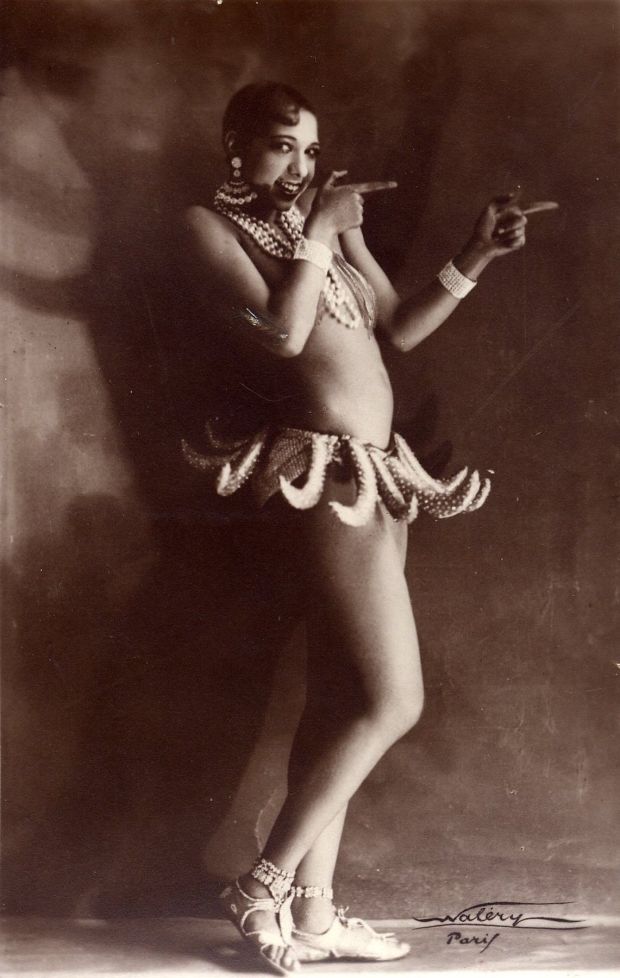
Josephine Baker: A Diva Who Embraced the world (Apr 9, 2014)
For this action project, we were assigned to write a people's history. We were instructed to interview someone who has been involved in some of demonstration. We recreated a page out of a history text book. The purpose of this project was to tell history through the eyes of the people. I interviewed a family friend who has been involved in several demonstrations such as the #blacklivesmatter and anti-trump rallies. I enjoyed talking to my interviewee.

I started being aware of what was happening around me because of someone who took care of me as a very young child. She exposed me to some of the singers that were a part of the growing civil right movement, such as Nina Simone and Josephine Baker. I grew up listening to music that I love and didn’t really understand.

Josephine Baker was an American born French jazz singer and dancer. Baker is also known for her contributions to the Civil Rights Movement. She became wildly popular in France during the 1920s. “In the 1920s she moved to France and soon became one of Europe’s most popular and highest-paid performers,” (Biography). Josephine Baker was born Freda Josephine McDonald in St. Louis, Missouri on June 3, 1906 (Biography). In 1935, Baker returned to the States and was received as an uppity colored girl (Encyclopedia). She refused to perform for segregated audiences. “White audiences were reportedly used to seeing, and wanted to see, blacks in what they considered “Negro” role --- Mammies and blues singers ---- and could not accept a black woman of style, grace, and sophistication,” (Encyclopedia). Through the 1950s and 60s she dedicated herself to combating racism and segregation in the States.

I was born in 1950, so when the civil rights movement got momentum I was in my teens, in high school. Before then, I was in a kind of protected life and was unaware of what was going on. In high school, I had an incredible teacher who had a huge impact in my classmates and I. When Martin Luther King was assassinated I entered a brief period of depression. I remember writing poetry about it and being so aware on the events of the world.

"Mississippi Goddamn" is a song composed, written, and performed by American pianist and singer Nina Simone. The song was Simone's response to the 16th Street Baptist Church bombing in Birmingham, Alabama, which killed four black children (Wikipedia & What happened to Nina Netflix documentary). "Alabama's got me so upset, Tennessee's made me lose my rest, and everybody knows about Mississippi goddam," are some of the lyrics demonstrating the political focus of the song early on. Mississippi Goddamn became a civil rights activist anthem and Simone's most famous protest song (Wikipedia).

In 1968, I went away to college at the University of California, Los Angeles. There was a lot more happening there about the war in Vietnam as well as the Civil rights movement. I immediately got involved in things that was available for me to do. There was a lot of things happening on my campus. Angela Davis, who was a very prominent figure in the Civil Rights movement was a professor at the University of California, Los Angeles.

Free Angela & All Political Prisoners, Essence Mar 28, 2013.
Angela Davis is an activist, scholar, and writer. She advocated for the oppressed. In 1970, "she made FBI's Ten-Most-Wanted list after guns registered in her name were used in a courthouse takeover which left four dead," (PBS). Eventually, she was acquitted of all charges.

I eventually ended up in Washington, DC for graduate school and lived there for several years union organizer. I moved to chicago in 1982, and once again there were lots of events around U.S dictatorships in Central and South America. My social life formed by my activities, through my activism I was able to make friend with people from all corners of the world.

I was involved in the backing of the election of Harold Washington, which was a flash-point for a lot of progressive people. I have also been involved in the #Blacklivesmatter demonstrations and was at the anti-trump rally. I involved in the #Blacklivesmatter demonstration on Michigan Ave in Chicago. It was wonderful. I felt so welcome and took the opportunity to learn. I have a coworker who is African American, she belong to the Charleston South Carolina church and my Facebook post restored her faith in white people.  


BB (interviewee, Facebook Post 2015)

The Fallacy, Delusion and Myth  of Tikkum Olam, 07/06/2013. 


I was raised Jewish and one of the values that I learned was that of Tikkum olam.

Tikkum olam (לתקן את העולם), which means repair the world. Tikkum olam is a concept in Judaism and is a commandment which has come to connote the pursuit of social justice in the modern movement in Judaism (Wikipedia). The term dates back to the Mishnaic period and Kabbalistic literature began broadening use of the term (Wikipedia).

My parents all through their life had stood up against injustice, but they were worried that I would give up my financial stability in order to carry this commandment through which I was willing to do. Activism is something that is kind of sort of in my faith and is a part of who I am, which is that you make a difference in the world.


Work Cited:
  • Jane Henderson. "Josephine Baker: A Diva Who Embraced the World."St.Louis Post Dispatch. N.p., 9 Apr. 2014. Web. 19 Mar. 2016. <http://www.stltoday.com/entertainment/books-and-literature/josephine-baker-a-diva-who-embraced-the-world/article_2f021e35-4c81-5388-a537-b4dcee3f3503.html>.
  • Tikkun olam. (2016, February 18). In Wikipedia, The Free Encyclopedia. Retrieved 19:15, March 19, 2016, from https://en.wikipedia.org/w/index.php?title=Tikkun_olam&oldid=705653548
  • WW1239. "Nina Simone - Mississippi Goddam." YouTube. YouTube, 24 Mar. 2013. Web. 19 Mar. 2016. <https://www.youtube.com/watch?v=fVQjGGJVSXc>.
  • Biography.com Editors. "Josephine Baker Biography." Bio.com. A&E Networks Television, n.d. Web. 19 Mar. 2016. <http://www.biography.com/people/josephine-baker-9195959>.
  • Harrison, Joyce. "Baker, Josephine." Contemporary Musicians. 1994. Retrieved March 19, 2016 from Encyclopedia.com: http://www.encyclopedia.com/doc/1G2-3492800011.html
  • Josephine Baker. (2016, March 19). In Wikipedia, The Free Encyclopedia. Retrieved 19:26, March 19, 2016, from https://en.wikipedia.org/w/index.php?title=Josephine_Baker&oldid=710884336
  • Y.A Korff. "The Fallacy, Delusion and Myth of Tikkun Olam." Algemeinercom RSS. N.p., 7 June 2013. Web. 19 Mar. 2016. <http://www.algemeiner.com/2013/06/07/the-fallacy-delusion-and-myth-of-tikkun-olam/#>.
  • Mississippi Goddam. (2016, February 1). In Wikipe
    dia, The Free Encyclopedia. Retrieved 20:16, March 19, 2016, from https://en.wikipedia.org/w/index.php?title=Mississippi_Goddam&oldid=702716257
    "EXCLUSIVE: Watch a Clip from 'Free Angela and All Political Prisoners'"Essence.com. N.p., 28 Mar. 2013. Web. 19 Mar. 2016. <http://www.essence.com/2013/03/28/exclusive-watch-clip-free-angela-and-all-political-prisoners>.
  • PBS. PBS, n.d. Web. 19 Mar. 2016. <http://www.pbs.org/wgbh/pages/frontline/shows/race/interviews/davis.html>.
  • BB, Interview. March 12, 2016.  

Sunday, March 13, 2016

Invisible Man


In my Equality course, we explored the inequalities experienced by people based upon race, gender, and class. We examined theories that identified and try to explain the existence of inequality. The readings on these theories were done in order to gain knowledge necessary to engage in discussions and challenge each others' ideas. We looked at what actions have been taken in the past to promote gender, race, and class disparities and what we can do now to overthrow the institution that perpetuate them. For this Action Project, we were assigned to write and analytical essays applying key ideas of race, gender, or class theorist to Invisible Man. We were also assigned to accompany our essay with a corresponding page from invisible Man that utilized blackout/decorative design elements to illustrate key points of our analysis. The purpose of this action project was to demonstrate mastery of key concepts from racial, gender, or class theorist we discussed in class.

Below is my analytical essay and blackout/decorative image:


GN, Analysis 2015.


Friday, January 15, 2016

Capsule - Book Bound


Our action project for Book Bound was a digital portfolio that offers an overview of our learning and experience of the course. Book Bound is an humanities course, in which we explored the definition of reading, evaluated its importance, explored works that are considered "classics" and understand the criteria necessary to earn such stature. We read The Great Gatsby by F.Scott Fitzgerald as an example of a "classic". I was indifferent about The Great Gatsby. I thought the plot was a bit diluted, but very thought provoking. We investigated the literary canon, critique it, offer alternatives and additions. The literary canon is the Great book list. The idea of a literary canon implies "official status" and to be entered into the canon mean gain to certain privileges. Also, we research roles necessary to build a library. We visited two libraries (a public library and school library) to familiarize ourselves with the inner-workings of a library, to find inspiration and guidance for our vision of our school library. I envision our school library with tons of work space, infinite availability of books, recording booths, computers, art/cool posters plastered on the walls and comfortable chairs. I enjoyed our field experiences because I learned about the different search engines for academic research offered at the library. For this action project, we were assigned to put together a portfolio of our best work throughout the course. My favorite project was our choice for the canon slideshow.


Storyboard:

Before embarking on our Book Bound adventure of the importance and history of reading, we took some time to remember and contemplate who we are as readers. Through the use of StoryboardThat, an autobiographical web-tool we were able to tell the story of our lifespan as readers, specifically on learning to read. Our stories had to include at least 5 frames and captions. We considered plot point such as: when and where we were when we first began to read, who helped us learn to read, what struggles we faced as readers, and how we felt reading in school as we crafted our stories. Prior to completing this activity I talk to my mom who has been very instrumental in my development as a reader for specific details about my reading history. Moms played a huge role in my classmates' reading stories as well. This assignment allowed many of us to dive into ourselves and create connections between our reading patterns and our history with reading. I had lots of fun working on this assignment. I struggled with how to start, but my conversation with my mom helped clear the haze. I added more details to my story and proofread. I am proud that my reading story shows my progression.


Slideshow:

What is a classic? How does something acquire such status? What does such a title suggest about the thing itself? These were some the questions we were presented with in the beginning of the course. Classic "belonging to the standard authors of Greek and Roman antiquity" "of the highest class; approved as a model" from the french word classique (17c.) from Latin classicus is a term used to categories books of the highest caliber. Certain books receive this status and end up on required reading lists across the U.S. These grouped together, literary classics are referred to as "the canon". The literary canon is the great book lists. They are texts that have been deemed worthy to be read by anyone who considers themselves cultured. For this assignment, we chose a book we believed belong in the canon and created a slideshow justify our choice. Also, we presented and defended our book selection to our peers. I wanted to share my enthusiasm for the Percy Jackson series by Rick Riordan with everyone hence why I chose to publish this assignment. I struggled with finding images of scenes for theme illustration. I added more details to the lesson plan portion of the presentation, added an image, and proofread.


Literary Journal:

We were assigned to create our own literary magazine/journal in team of 4s. Literary magazine is a periodical magazine/journal dedicated to literature. Literary magazines publish short stories, poetry, literary criticism, letters, interviews, essays, and many more. Our literary magazine consisted of external submission, pieces from all group members, and images. This assignment showcased different types of literature. I really proud of the pieces in the magazine. We split up different tasks among ourselves. Miscommunication impacted our quite a bit, but in the end we pulled through. I fixed the page set-up.


Literature Poster:

We created propaganda literary posters based upon a guiding question about literacy. We research the answer to our guiding question using reliable sources. My guiding question was "How many books does the average american read yearly?" The average American read 12 books in the past 12 months according to the Pew research center. The purpose of this poster and course is to promote literacy. I want to encourage literacy in the most effective way as possible and this assignment allows me to do so. I was difficult to come up with a concept for my drawing. I used paper and pencil. I am proud to have persevered.

GN, Literature poster 2015. 


Thursday, November 19, 2015

Little Indi-Paki


For my If these walls could talk course, we were assigned to choose a neighborhood in Chicago, examined its history and the needs of its community, illustrate an image that forfilled those needs, and write an artist statement to defend our design. If these walls could talk is an art and history elective course that explores the history of murals. I chose the 50th ward, also known as West Ridge but focused on "Little India" for this project. The purpose of this action project was to illustrate an image that could be used to create a large-scale mural. I learned about the evolution of the techniques used to show perspective. I enjoyed learning about the Medici family and their influence in the Renaissance in Florence, Italy. I struggled with writing my artist statement, but meeting with my teacher helped clear the haze.

Below is my image and my artist statement!

GN, In Harmony 2015 


GN
11/2015
In Harmony 11” x 14”
Pencil on paper

For as long as I could remember I have been infatuated with India. My obsession is not just related to the Bollywood industry, the rich and spicy food, or the colorful ornate clothing. Although, I should mention that my closet is better suited to Punjab than Chicago and that I hanker over Barun Sobti rather than Zac Efron.

Little India is a ten-block stretch on Devon Avenue on Chicago’s north side. Little India is one of the most vibrant neighborhoods in Chicago. The culture, markets, and savor of this ten-block stretch on Devon Avenue help keep my addiction at arm’s length until I have an opportunity to disembark at Pathankot Airport. Being hit by a heady aroma of spices from a nearby restaurant or being drawn by a saris to a storefront are what keep attracting me to Little India. Skipping to Devon is a lot easier than trudging to Mumbai or Punjab. Devon is the most diverse street in the city. Although mainly Indian-focused, according to the Executive Director of West Ridge Chamber of Commerce, 75% of the area’s residential population is Jewish. Devon is home to Indian-Americans, Pakistani-Americans, Jews, Eastern-Europeans, and Assyrian-Americans and this melting pot gets along just great.

I’m proposing a mural that celebrates Little India, but also one that calls attention to the individual cultures within it. Although Little India is mainly focused on India, a lot of businesses are also owned by Pakistanis, Russians, Iraqis among others. My piece is both a tribute mural to make Little India even more beautiful and to bring to attention the plethora of cultures residing in Little India especially Pakistan that are often overlooked.

My sketch is of an Indian woman and a Pakistani man marrying. The motifs in the background are prominent symbols in both cultures. My sketch mimics the complex, more detailed style of Ancient Greeks and Ancient Egyptian paintings. This more complex and detailed style of paintings showcase the relations between Indian and Pakistani in there land of origin. Though Indians and Pakistanis don’t get along in their land of origin, I find it fascinating how they coexist in harmony in Little India. I was inspired by the use color and the simple yet intricate forms in the Ajanta cave Frescoes in India. I utilized the Hindi and Urdu both the official languages in each country to represent each culture’s individualism while also accentuating their cohesion and harmony. With the motifs receding in the background and telling its own story, I’ve utilized the use of vignettes to create meaning, fluidity, cohesion and uniformity in the painting. In order to represent the vibrancy of each culture, I used such colors as red, blue, yellow, pink, orange, and brown.

When installed, the mural will span the wall in the center of Little India and Pakistan. I hope that this mural transcends its audience to a state of joy, uniformity. and inclusion.


Wednesday, May 13, 2015

"Just" War

CNN. "Special Report: Who Are The Yazidis, And Why Does ISIS Want To Kill Them? (PHOTOS) - The Trent." The Trent. N.p., 12 Aug. 2014. Web. 13 May 2015. 

For my Policy course, we were assigned to select a war to focus on, research policies and (executive) orders related to that war, and write an analytical essay arguing whether that war was “right” or “wrong”. The purpose of this action project was to take a specific position on whether the U.S involvement in a specific war was justified or not. This action project is particularly difficult on an ethical ground because Is there a difference between a “right” war and a “wrong” war? How do we distinguish between the two? Is there such a thing as a “just” war? The merriam-webster defines just as having a basis in or conforming to fact or reason, acting or being in conformity with what is morally upright or good, righteous, and legally correct.

The majority of people believe that killing, fighting, and war is wrong, but might agree that in some situations it is necessary. When is war just? Philosophers, statesmen, and justices have grappled with this question for centuries, beginning with the first Mesopotamians to the Greeks (History of the world, Wiki). “The just war theory or the jus ad bellum is a doctrine, also referred to as a tradition, of military ethics studied by theologians, ethicists, policymakers, and military leaders (just war theory, Wiki). The just war theory has become basis for international agreements like the Geneva Convention and modern humanitarian laws. The Geneva Convention of 1864 was the first treaty concerning humanitarian aid in wartime. It extensively defined the basic rights of wartime prisoners, established protection for the wounded, and established protections for civilians in and around a war-zone (Wiki).

According to the “just war theory”, was America justified in declaring war on Japan and subsequently on Germany and Italy? This essay will attempt to prove that the U.S involvement in World War 2 was a just one. On Friday September 1, 1939, Germany invaded Poland which marked the start of World war 2. The global war lasted from 1939 to 1945, it involved the majority of the world’s nations, including all the great powers. WW2 formed two opposing military alliances: the Allies and the Axis. Germany, Italy, Japan were the Axis. The U.S, Britain, France, Australia, China, and the Soviet Union were the Allies.

The jus ad bellum sets forth 6 requirements, all of which must be met for a war to be considered “just”. Using 2 requirements set forth by jus ad bellum, I will attempt to prove that the U.S. involvement in World War 2 war just.
  • Just cause. “Just cause is first and foremost the self-defense of a nation that is physically and aggressively attacked by another nation”(). “Although the war began with Nazi Germany’s attack on Poland in September 1939, the United states did not enter the war until after the Japanese bombed the American fleet in Pearl Harbor, Hawaii, on December 7, 1941” (World war 2). Almost at the same time, Japanese airplanes attack two U.S islands: Wake and Guam, which were later occupied. In December 08, 1940, President Franklin D. Roosevelt declared war on Japan. The United States exhausted all plausible and peaceful alternatives to resolve the conflict in question. In an effort to remain neutral, In July 1940 the U.S cuts off oil exports to Japan after Japanese troops began to occupy the French colony of Indochina (National Geographic). In September 1940, Germany, Italy, and Japan signed a treaty (the Tripartite Pact) that made the three countries allies against England and France (National Geographic). The treaty is seen as a warning to the U.S to stop helping England and France, because the U.S had traded 50 old destroyers to England in exchange for naval and air bases in the Western Hemisphere (National Geographic). By July 1940, Germany had invaded Norway, Denmark, Netherlands, Belgium, Luxembourg, and conquered France. The United States was physically and aggressively attacked by Japan, thus abiding to the just cause requirements of the jus ad bellum. 
  • Right intentions. The nation that wages war must do so for the right motives, that is, just to ensure that the just cause is attained by war’s end. The U.S entrance in World war 2 was motivated by morally rational motives. “Hitler's germany was extending totalitarianism, racism, militarism, and overt aggressive warfare beyond what an already cynical world had experienced,” (World War II: A People's War? - Howard Zinn). World war 2 was a war against an enemy of unspeakable evil. Universal goods expected to result from of the war was proportional to the cost the war proceeded. 

Though, the U.S entrance in the war and the WW2 itself was just, our country’s wartime policies, and treatment of minorities at home casted shadows on that principle. Franklin D. Roosevelt converted America’s economy into a military economy and the unemployment problem ended with the mobilization for war. FDR took part in the Atlantic Charter, and executive actions, but Congress had it’s own agenda. Congress passed the Lend-Leases Act. “The act authorized the president to transfer arms or any other defense materials for which Congress appropriated money to “the government of any country whose defense the President deems vital to the defense of the United States” (History).

In a WW2 espionage scare frenzy, President Franklin D. Roosevelt, encouraged by officials at all levels of the federal government authorized the internment American citizens of Japanese ancestry and resident aliens from Japan (Historymatters). Roosevelt’s executive order 9066, ‘“authorized the evacuation of all persons deemed a threat to national security from the West Coast to relocation centers further inland,” (Archives.gov). Executive order 9066 was unconstitutional and discriminative. Executive order 9066 went against the Bills of rights and violated a U.S law: the incarceration of U.S citizens without due process of the law. The executive order fueled hatred and prejudice towards Japanese Americans and went against the law. In 1988, President Jimmy Carter issued a $20,000 reparation to each surviving internee.

War’s controversial social effects raises troubling ethical/moral question for any thoughtful person, yet it remains central to social changes and human history which seems extremely paradoxical. I am not certain if anything makes a war "just" but the just war theory is a way in which we can make sure that a war is justified.


Works Cited:

Thursday, November 13, 2014

Modeling Creatively


In my Five Faces of Genius course, we are exploring personal creativity, and learning different tools and skills that help unlock more creativity, and how creativity can help us and our community. In our first unit, we developed an appreciation for creative genius, established a range of individuals who demonstrate genius, and discussed the difference between creativity and genius. Along the way our class created a Genius Gallery, showcasing a range of people who demonstrated genius or creativity. For our first Action Project, we were asked to observe and articulate patterns of genius and creativity. The purpose of this action project was to learn the true meaning of genius. I learned a lot about creativity, and am very proud of completing this project on time.

There are several patterns in our Genius Gallery. One of the patterns is that almost all of the geniuses in our gallery are frequently in the media. This pattern does not really produce geniuses, but can someone truly be a genius if no one knows about them? People are drawn to geniuses, and want to know more about them, thus putting them in the spotlight. Some geniuses that are in the public spotlight are: Michael Jackson, J.K. Rowling, and Kanye West. Another pattern I have discovered is that most of the geniuses in our gallery come from a low income family. In my opinion, people that come from a low income family tend to work harder to break the cycle of poverty. Some examples are: J.K. Rowling, Kanye West/Jay Z, and Eminem. The last pattern I noticed was that some of these geniuses went through some type of struggles. Kurt Vonnegut for example was a prisoner of war. Jay Z grew up without a father in a housing in Brooklyn. Eminem also grew up without a father, and worked several jobs to help his mother with the bills.


Kpriss. "Naomi Campbell Endless In NUmero Russia March 2013. "StyleFrizz. N.p., 11 Mar.2013.Web. 16 Nov. 2014.
Model Naomi Campbell is another example of a powerful creative genius. No discussion of supermodels would be complete without a mention of Naomi Campbell. She breathed life into the term supermodel. Campbell is not just another pretty girl, she broke ground as the first black woman to ever appear on the cover of Time magazine and French and British Vogue (Naomi Campbell). Being a successful model requires a multitude of skills, such as creativity, perseverance, strong sense of self, self-worth, confidence and determination. Though Campbell was discovered by one of the top modeling agencies, she worked extremely hard to achieve success. She embarked on other ventures, which included an R&B-pop studio album, several acting appearances in film and television and a novel.

Models need a strong sense of self and confidence. The modeling industry is a very competitive field. There is always going to be someone thinner and prettier; therefore, you need to have a strong sense of what you bring to the table. Campbell is extremely confident in herself and exerts self-examination, an examination of one’s own behavior and motivation.

Fashion is a very creative field. Clothing designers and models are visual artists, and clothing and the body are their medium. Although Campbell has many strengths, she faced countless obstacles. She suffered from a cocaine addiction and faced multiple legal issues. Unfortunately, drug addictions come with the fame territory. "I was having fun. I was living this life of traveling the world and having people just give you anything," said Naomi Campbell. This quote just shows her strong sense of self-examination and self-identity. Also, she faced multiple legal issues all about assaults.Though she didn't use any of her strength to overcome this obstacle, she realizes that she was wrong and has apologized for it (self-examination). “I am a human, being and I make mistakes,” Naomi Campbell at a CBS interview. 

Three strengths that I possess are: determination, conscientiousness, and open-mindedness. There is creativity in being open-minded. Open-mindedness is not just the receptiveness of new ideas, it is the acknowledgement and consideration of one's view, which then leads to the evolution of one’s thoughts. And creativity is evolution. Conscientiousness is the personality trait of being careful and organized. You can be creative with the way you organize things. For example, I have used a magazine rack as a pot lid holder in my house. One challenge that I faced was doing action projects as a main mode of evaluation. Through determination, I pushed through and have gotten used to doing them. The way in which someone shows determination is a creative pursuit. A challenge that the world faces is stereotyping. I want to tap into my creative genius to find more ways to encourage people to be more open-minded like myself, as I feel this will lead to more people looking at the world in a new perceptive.
"A genius is a person who displays exceptional intellectual ability, creativity or originality, typically to a degree that is associated with the achievement of now advances in a domain of knowledge," (Wikipedia). The widely regarded genius, Albert Einstein said that creativity is intelligence having fun. Then is there creativity without intelligence and vice versa? The truth is, for the human species creativity is an instinct. If you have ever doodled on a piece of paper during a lecture, or if you have ever drawn on a window filled with condensation, then you are creative. "Don't fall into the trap of associating creativity with artistry" said Mark, an IIT student. We image, envision, and daydream, and because of these thought habits humanity/world is always evolving and changing, which is why things are never stagnant.

Works Cited:

Friday, October 17, 2014

A Dream of Science


In my Rhetoric course, we were assigned to articulate a dream that we have for our city and write a speech about it. We identified obstacles to our dream and envisioned solutions to them. We drafted, edited, and revised our three drafts of our speech. The purpose for this action project was to write a persuasive speech about an issues you feel strongly about facing your community. The topic I felt most strongly about was women and minorities in STEM. Science affects us all, and we need to support students who are interested in science and change some of science stereotypes.
Below is my Speech!

"Chicago | US2020." Chicago | US2020. N.p., n.d. Web. 18 Oct. 2014.


AUDIO:


Monday, September 22, 2014

A Commencement Speech Analysis


Rhetoric is a course about effective writing. For our first action project, we were instructed to identify an example of a text and argue for the text inclusion our school's library. The purpose of this action project was to demonstrate mastery of Aristotle's model of rhetoric. I learned to apply Aristotle's model to a text and evaluate a rhetorical text using that model.


McGEE. Van Dusen. A Morman and his wives dancing to the devil's tune. 1850. Web: Wikipedia


Works Cited:
Fundamentalism. (2013, July 24). Wikipedia, . Retrieved 02:01, September 23, 2014 from http://simple.wikipedia.org/w/index.php?title=Fundamentalism&oldid=4510965.

Friday, May 16, 2014

The Dinner Party

"Katharine Hepburn." PRINT AND PATTERN. N.p., n.d. Web. 26 May 2014.
In my Drama course, we were assigned to create our own dialogue that investigates the question " Should men and women have different roles in society"?. Our dialogue had to feature three characters, ourselves, Nora, a character from Henrik Ibsen’s play A Doll’s house. We read A Doll’s House to analyze women’s roles in Norwegian society around the 1800s. Also, our dialogue had to feature one mythical or historical woman featured in The Dinner Party. The Dinner Party is an artwork installation depicting place settings for famous historical and mythical women, created by feminist artist Judy Chicago. The purpose of this action project was to create our own dialogue that investigates the question “ Should women and men have different roles in society”?.

I had troubles coming up with a concrete story line, which made my script writing process challenging. Completing this script was such an accomplishment. Though, I faced lots of challenges I enjoyed researching and analyzing my characters and figuring out their answers to question our script was based upon. 

Please see my script acted below and read the script.


Citations: 
"Katharine Hepburn." PRINT AND PATTERN. N.p., n.d. Web. 26 May 2014. <http://printandpattern.net/welcome-to-hollywood/katharine-hepburn/>.

Tuesday, January 28, 2014

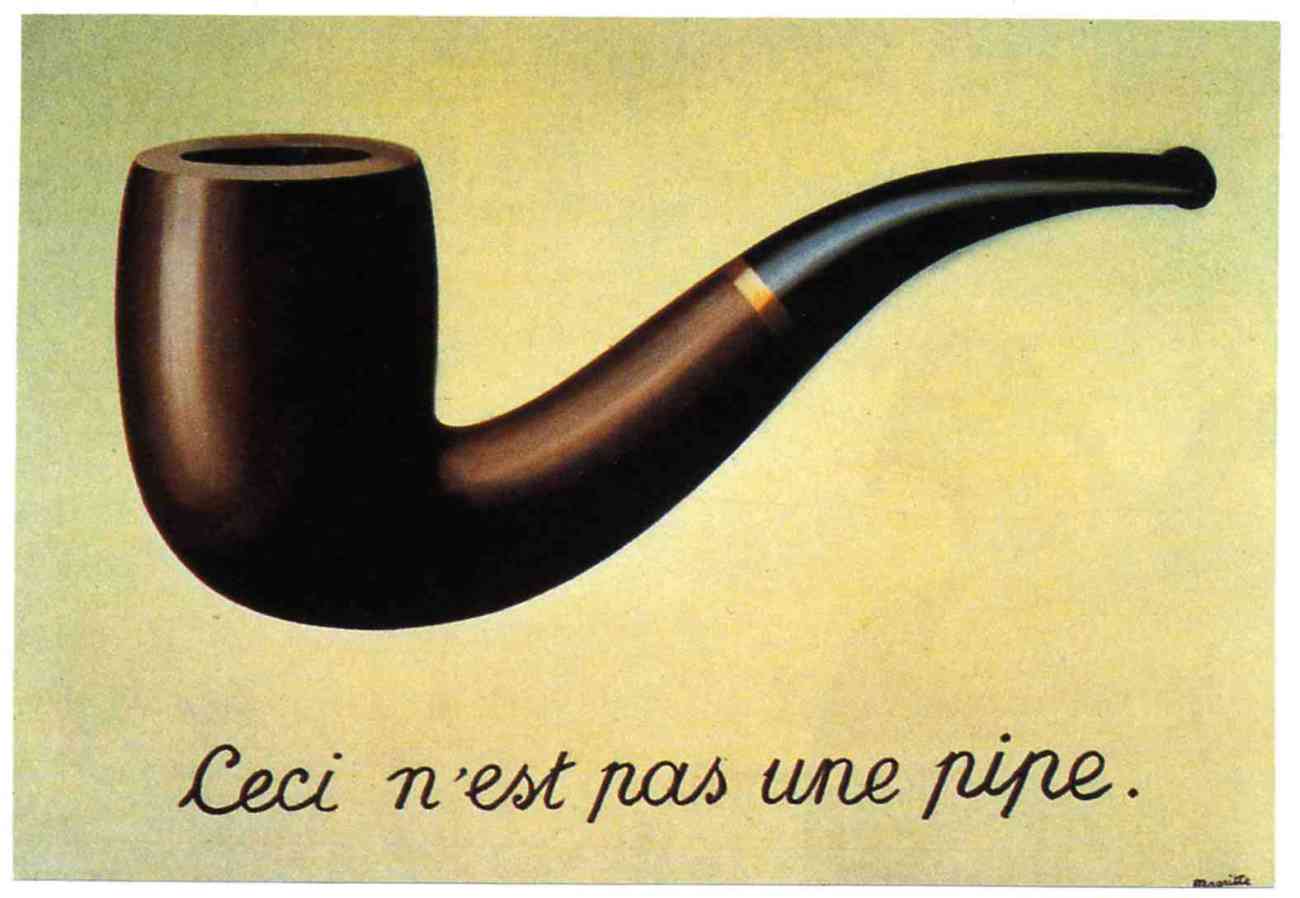
Ceci n'est pas une pipe

R. MAGRITTE, La trahison des images, 1928-29, huile sur toile, Los Angeles county Museum of Art, Los Angeles

                “ An unexamined life is a life not worth living ,” Socrates.

In my Forbidden Books course, we were assigned to develop characters to participate in a Socratic dialogue and record our dialogue on video. In our dialogue, one character is confronted with a dilemma of a philosophical nature. The Socratic Method is based on asking and answering questions that stimulate critical thinking and clarify ideas. This method was invented by Socrates,  an ancient greek philosopher who is known as the father of western philosophy.  
Each students was assigned a theme such as beauty, justice, or love and was instructed to write a socratic dialogue examining the meaning of theme assigned to them. My theme is reality.


Morpheus - played by AJ
Phaedrus -  played by GN


Script:
Morpheus: Hello Phaedrus, how are you today? (Sitting on the courtyard steps.)

Phaedrus: I’m fine, but I am trying to figure something out.

Morpheus: What are you trying to figure out? It seems to me that you have been thinking deeply about something.

Phaedrus: Well, I have been wondering whether you are really there, or if everything I see and do is just in my imagination! Are there really other people, and places, and things to eat, or are they just figments of my imagination? I certainly hope I am real! But it’s a good question. Before we can answer it, though, I think we need to ask, what is reality, and how can we decide whether something is real?

Morpheus: Reality is reality! It is anything that would still be here if there were no one around to experience it.

Phaedrus: Are you implying that we humans do not exist? Are language, consciousness and ideas real? If they are, we must be real, because none of these things would exist without us.

Morpheus: All I know is that we are not simply figments of our imagination. Reality is anything you can touch, see, smell and feel. Something is real if everyone can experience it.

Phaedrus: What about paintings? The tableau itself abides by your definition of reality, but is the image represented on the tableau real? Everyone is able to see, touch and feel the image!

Morpheus: The actual painting is real, but the image represented on it is not.

Phaedrus: Then, what is the difference between a representation of something and the real thing?

Morpheus: A real thing exists in space. It occupies a space.

Phaedrus: Really? What about a mirage?

Morpheus: Mirages are different, they are optical illusions caused by atmospheric conditions. They do not occupy space!

Phaedrus: You are right. Mirages are optical illusions caused by atmospheric conditions. They occur when light rays are refracted and form a false image at the observer’s location. Have you ever heard of Descartes?

Morpheus: Yes. Descartes was a French philosopher and mathematician. He is best known for his philosophical statement saying: “ Je pense, donc je suis; I think therefore I am.”

Phaedrus: Do you agree with that proposition?

Morpheus: I do. Descartes used that proposition to prove that the world exists.

Phaedrus: Is a chair real? A chair cannot think, from my experience. We may be able to think, but how do we know whether or not those ideas are actually ours? And what if someone planted those ideas in our brains, are those ideas still ours? Maybe our brain are pre-programmed, like a robot.

Morpheus: You are right! I cannot answer those question. I was blinded by my own beliefs, and was unable to examine them. You have taught me something. I need to start questioning my beliefs, so that I may defend them better (He said stoutly). You made a great vindication of your ideas.

Sunday, November 17, 2013

View Point - An illustration of agricultural

In my food for thought course, we were assigned to create an four panel illustration, representing the four units of our course. The purpose of this action project was to convey our understanding and envision for the future of agriculture through an illustration. I enjoyed working on this action project.
Below is my poster.

Drawing by GN, photo by Tim Reed.


Friday, November 8, 2013

Rise Up and Take Action - A Freedom song

  In my Global Peace course, we were assigned to research a civil rights leader or any nonviolent leader. I wrote a Freedom Song that highlighted the struggles of Susan B. Anthony and how she overcame them. Also, we were assigned to reflect on our own struggles. The purpose of this action project is to put ourselves into the shoes of a nonviolent leader, and be inspired by their actions.

               san B. Anthony. (2013, November 8). In Wikipedia, The Free Encyclopedia. Retrieved 17:30, November 8, 2013,


FREEDOM FIGHTER:
I wanted to fight against slavery,
Vile, wicked, sinful slavery,
I wanted to speak to the crowds
Who came to abolitionist meetings.
Who, like freedom riders,
Spoke up for the oppressed.
The men said, “It is an abomination
For ladies to speak in public.”
I disagree. I am Susan B. Anthony.

I am strong for the mothers
The wives, and the daughters
I am strong for those profoundly asleep
I am the hinge between freedom and dependence

Once upon a time
A woman could not
Vote
Keep her wages
Own or inherit property
(Unless, like me, she was a “spinster”)
Get a divorce
(Unless her husband wanted one)
Keep her children after a divorce.
I began to fight for women.

I did not live
To see women vote.
But I changed the rest.
The welfare of women
Is the welfare of all.


PERSONAL POEM:
I am caught between worlds.
At home I eat fufu,
And speak French.
At school I eat pizza,
And speak teenager.

I am making a whole
From pieces of two kits.
I learn the lessons
Of my ancestors,
And wear the clothes
Of my descendants.

I am, in myself, diverse.
If I can live with my differences
We can all live
With one another’s differences.
Sarvodaya.

Worked cited: 

Monday, October 21, 2013

Hero's Journey

 In my Stories course, we were assigned to write an analysis for a fictional hero and non-fiction hero based on Joseph Campbell's model of the Hero's journey. We study Joseph Campbell's Monomyth theory. The purpose of this action project was to analyze our heroes and their stories. My analysis is a combination of a presentation and detailed summary. I enjoyed working on this action project.

Below is my written analysis and presentation.


Hero’s Journey


Percy Jackson and the Olympians: The Lightning thief is a fantasy film set in the 21st century. The film borders around the Percy Jackson novel series, by Rick Riordan. In the film, the gods of Mount Olympus and monsters seemed to have walked right out of Percy Jackson’s mythology book and into his life. In the film, Percy is portrayed as a brave and  courageous teenager.

Call to adventure
Unaware of his true identity, Percy is a troubled 16 years with ADHD and dyslexia, with an unique ability to stay underwater for a long period of time. On a field trip to the museum, a fury disguised as Mrs.Dodds attacked Percy and demands for Zeus’s lightning bolt. Zeus’s lightning bolt is the most powerful and devastating weapon. It can destroy mountains and kill Titans.

Mentor/Helper
Percy’s best friend, Grover and Mr. Brunner, his latin teacher helped scare the fury away. Mr.Brunner has Grover take Percy to his mother Sally to Camp half blood. On there way to camp half blood, they are attacked by a minotaur. Percy loses his mother during this battle.

Threshold
By using the minotaur’s horns, Percy was able to kill the minotaur. from all the shock, he fainted. A couples days later, he learned he was the son of Poseidon, that  Mr.Brunner or Chiron was a centaur, and that Grover was a satyr, his protector. Chiron shared all of his knowledge with Percy, and warns him of the danger that lays ahead.

Growth/Skills
Percy began training to use his powers, which include water manipulation and water healing.  After winning a capture the flag game, he received a fiery apparition of his uncle Hades, who reveals that his mother is with him in the underworld. Percy decides to disobey Chiron and go to the underworld. He is accompanied by Annabeth, daughter of Athena and Grover. Luke, son of Hermes provides them with a shield, a pair of winged sneakers, and a map showing the locations of three pearls.

Trials/Challenges
The trio located the first pearl at Medusa's Lair. Percy decapitated her and took her head for later use. The second pearl is in the Parthenon in Nashville. Percy recovers the pearl. However, they are confronted by Hydra. They petrified her by using Medusa’s head. The Third pearl is in the Lotus casino in Las Vegas. Percy, Annabeth, and Grover ate the lotus flower and forgot their purposes. Poseidon spoke in Percy’s mind, which helped him return to his senses. With all of the pearls in their possession, they located the portal to the underworld.

Return
In the underworld, they meet Persephone and Hades. Hades finds the lightning bolt hidden inside Luke’s shield, revealing that Luke was the lightning thief. Because there was only three pearls, Grover volunteered to stay with Persephone, enabling Sally to leave the underworld. The three teleported to the Empire State building, Mount Olympus. Luke attacked Percy.

Revelation/Discarding old self/Accepting the new role
By accepting his identity, he was able to harness the complete power of water. Percy defeated Luke, returned the lightning bolt to Zeus, which allowed Poseidon to briefly speak to his son. The film ends with Percy and Annabeth reunited with Grover and returning to camp Half Blood to continue his training.

 Non-Fictional Hero


Heroes take many forms when we are children, from comic book superheroes such as superman to imaginary friends. As we reach adulthood, our definition of a hero becomes clear, and our heroes become those who we love and admire. Heroes are typically identified with good qualities. Many define heroism as bravery. The dictionary defines bravery as showing no fear.  We are all heroes and have our own heroes. My hero is my mother. My mom has always been the backbone of our family. I have always tried to live through her.


The image above is a comic strip showing six different phases of my hero’s educational paths and struggles.

Call to adventure/Threshold
My mother grew up. My mother grew up in Divenie, a village in the Congo. At the age of 3, she started working in the fields/plantations with her parents. “ I worked 5 hours a day,” she said in her interview with me. She lived in a humbled home. She started school when she was 5 years old. “Going to school was a struggle for me,” she said remorsefully.

Trials/Threshold
My mom, never received the support she needed. “ My parents weren’t able to support me financially or emotionally,” she said. My mom never gave up on her studies. She left the village to go to the city and pursue her dream of becoming a teacher.  She walked about 20 kilometers each day to attend school. My mom was able to support herself financially, by making clothes.

Mentor/Discarding old self/Revelation
Her grandmother supported her emotionally. “ If it wasn’t for my grandmother, I would have lost my mind,” She said lovingly. However, she struggled with keeping up with other students. By her senior year, she got pregnant with her child and stopped going to school. “ Unfortunately, my dream never can true,” She said  mournfully.

Friday, January 25, 2013

Believe Your Truth- PODCAST BY GN

For our Humanities course, we were assigned to create a podcast expressing our beliefs. We went on a journey and investigated ourselves through philosophical discussions. The purpose of this action project is to express our beliefs in a podcast form. Through the process of finalizing my essay and recording a podcast, I gained the foundation of belief. I gained pride in acknowledging the essence of who I am.

Please listen to my podcast and read my script below.


I believe in myself. My name is GN, but that is a label. Like every student, I am a person who gets up in the morning, goes to school, and comes home. We all have the same desires; we fear and love in the same manner. We end up diverse because of an innumerable set of occurrences. I am who I am because of my experiences and memories, not because of my name, skin color, or country of origin.

The dictionary defines belief as “an acceptance that a statement is true or that something exists.” A belief is something one accepts as true or real, a firmly held opinion or conviction. Beliefs are the fundamental ingredients in identity. They are the answer to the question of who we are. Belief can influence our behavior; therefore it is of great importance. Because belief is an acceptance of truth, it is important to know what we mean by truth. I define truth as the individual person, his or her practices, and what is right and wrong.

Small miracles in my life led me to believe in God. When I was a little kid, my family was very poor. Our status as legal immigrants in Gabon limited work opportunities. My mother and father worked many hours a day in order to pay the bills, until one day, my father was offered a job as a janitor at a local market. His salary covered everything. For us, it was a miracle.

One of the reasons I believe in God is that faith gives an explanation of something greater than myself, giving my life purpose and meaning. In life’s randomness, so many of us rush through the days, unmindful of the preciousness of who we are, and forgetful of the abundance of love given to us and the opportunities that surround us.
Like my father’s new job, the innumerable set of occurrences that make me unique, my experiences and memories, are small miracles. The same miracles that give me faith in God allow me to believe in myself.