In Stage Chemistry, we were assigned to build a 3D model of the theatre in our first Action Project (see the blueprints from Unit 1, here). We were assigned to play the role of a set designer, also known as the scenic designer. The scenic designer established an overall visual concept for the production and design the stage environment. We had to incorporate the scale and proportions determined in Unit 1, add working miniatures to demonstrate motion that will occur on stage, and an explanation of how & why the elements in our 3D model optimizes our adaptation. The purpose of this action project was to build a 3D model. I learned how to build stairs with the help of JR.
The stage has been set with a functioning star trap style door, and a rotating scenery flats.
.jpg) |
| Areal view of stage. GN, 2014 |
 |
| Stage. GN, 2014 |
 |
| Stage. GN, 2014 |
Rotary Scenery Flats:
The adaptation is split into three important locations in the story - Scrooge's residence, graveyard, Scrooge's business. Any other scenes will take place without the scenery on the stage. It would either be projected or very reliant on props.
Inspired by Aaron Moring-D'angier's equilateral triangular prism, I too constructed an equilateral triangular prism that is made of three 3'x8' flats attached on the sides. The triangular prism rests on a raked based, which accounts for the raked stage. The rotary scenery would be moved mechanically by a computer. It would already be programmed in terms of the time at which the prism will rotate. I thought that having an actor or someone physically move it would pose a risk I was not willing to take (perfect timing would of been an issue).
 |
| GN, with the help of Aaron Moring-D'angier |
Star Trap:
In theatre, a trap is a concealed opening usually in the stage floor. Traps are used to create a great variety of stage effects, such as the sudden appearance and disappearance of characters or objects on stage. There are many types of traps. The star trap is a circular opening with lids composed of wedge-shaped sections individually hinged to the circumference.
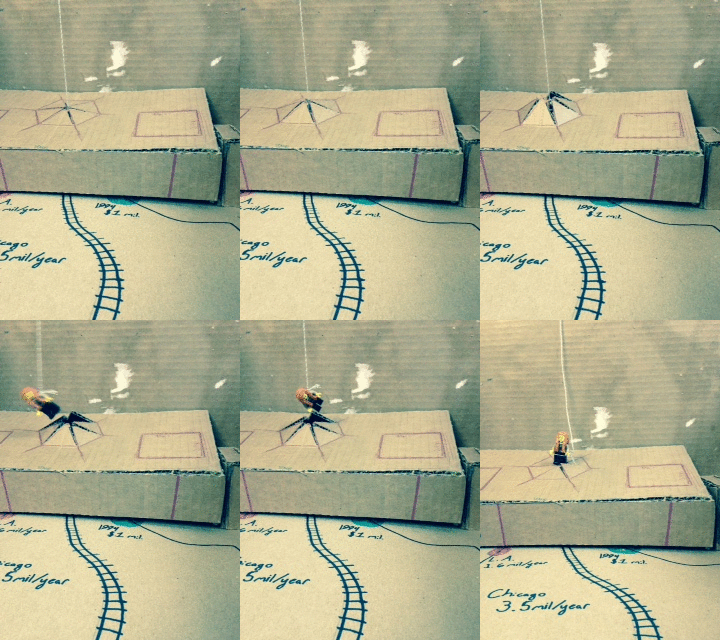 |
| GN, with the help of Aaron Moring-D'angier |
Trap Safety Protocols:
- Prepared yourself (timing)
- Make sure the wedge-shaped section functions properly
- Stabilize yourself after going through the star trap
Works Cited:
