Thursday, April 24, 2014

Taming of the Shrew - sonnet


In my Drama course, we have been reading The Taming of the Shrew and for our action project we were assigned to write a sonnet addressing a character in the Taming of the Shrew. The purpose of this action project was to make a commentary on gender roles by addressing one of the characters in the play, The Taming of the Shrew. I enjoyed writing this sonnet.

Below is my sonnet and a video of me performing the sonnet

How shall I see thee from the modern day?
Do you have some relevance to me?
Your change of heart, did you really feel that way?
You were mewed so easily

I can’t imagine behaving as you did,
Your final monologue just made me mad:
“Wives should do as their husbands bid,”
In our time these bondmaids are simply sad.
When we talk about Petruchio’s Kate,
We can take a lesson for our lives.
To not be doomed to Katherine’s fate
And be partners, not merely wives.

When to Shakespeare’s plays we turn,
Let it be literature, not life, we learn.


Lets learn from our story


In the Drama course, we have been reading “The Taming of the Shrew by William Shakespeare. For the first Action Project we were challenged to write a sonnet addressing one of the characters in “The Taming of the Shrew”. The sonnets we wrote also had to make a commentary on gender roles during Shakespeare's time and our reaction to how one character dealt with their own gender role. I enjoyed working on this action project.

Please find my sonnet and my performance of it below:


How shall I see thee from the modern day?
Do you have some relevance to me?
Your change of heart, did you really feel that way?
You were mewed so easily

I can’t imagine behaving as you did,
Your final monologue just made me mad:
“Wives should do as their husbands bid,”
In our time these bondmaids are simply sad.

When we talk about Petruchio’s Kate,
We can take a lesson for our lives.
To not be doomed to Katherine’s fate
And be partners, not merely wives.

When to Shakespeare’s plays we turn,
Let it be literature, not life, we learn.


Mastectomy


In my Cure course, we were assigned to select a type of surgery to investigate. We identified the variable tackled by this surgery, identified the affect of this on the organs, tissues, and body etc. We also had to visually recreate this surgery, explain the process of healing and research type standard post-surgery treatment. The purpose of this action project was to map chosen surgery and identifying organs, tissues, and systems affected by the procedure.

Below is my presentation about A Mastectomy (Breast cancer):

Thursday, February 20, 2014

Cholera as a Pandemic (Disease A3)

In my Disease course, we were assigned to map and graph the geography of  a disease. We selected two risk factors related to the epidemic, and record a presentation of this epidemic. The purpose of this action project was to map and graph the path of an epidemic and interpret our graph so the world may understand the problem and search for a cure.


Wednesday, February 5, 2014

Enough Ignorance - Disease Project


In my Disease course, we were instructed to choose a mental disorder that sparked our interest, and create a lesson plan that was able to put its audience in the shoes of someone with a mental disorder. Also, we created a flyer containing information about our mental disorder. The purpose of this action project was to create a sensory experience that stimulates what it feels like to see the world, through someone with a mental disorder. My project was based on Borderline Personality Disorder or BPD. I enjoyed working on this action project.

Below is my short explanation paragraph, flyer, and lesson plan

Image created by Andree Kahlmorgan "The Mystery of Borderline Personality Disorder." Time. Time Inc., 08 Jan. 2009. Web. 07 Feb. 2014.


EXPLANATION:

Borderline Personality Disorder or BPD is a mental disorder that is characterized by the patterns of unstable emotions (NIMH). BPD is a mental disorder that is marked by unstable relationships, mood and behavior. The Fifth Edition of the Diagnostic and Statistical Manual For Mental Disorders listed BPD as a cluster B personality disorder. According to the DSM, an individual must exhibit five (5) pattern of behaviors in order to be diagnosed with BPD.

Pattern of behaviors such as:
- Unstable sense of self, which leads to changes in feelings, goals for the future.
- Dangerous behaviors, such as binge eating or substance abuse.
- Strong bouts of anger.
- Mood swings, changeable moods lasting about a few hours.
- Feelings of emptiness.
- Intense or stormy relationships with loved one's and family.

These instabilities can disrupt work life, family life, and the individual's sense of self - self identity. Many people with BPD find normality through self harming. "An individual with BPD thinks that self mutilation is helpful, and helps regulate their emotions; they do not see these behaviors as harmful, " said Ally, a National Institute of Mental Health employee. As far as prevalence, it is estimated that 1.6% of adults in the United States have BPD in a given year (National Institute of Mental Health).

BROCHURE


LESSON PLAN


The image above collects three student visual interpretations of my reflective lesson prompt.


Image Citations for the Brochure:


1. Staff. "Borderline Personality Disorder." Healthy Black Men. N.p., 29 Sept. 2012. Web. 06 Feb. 2014. <http://healthyblackmen.org/2013/09/29/borderline-personality-disorder/>.


2. Mmm Daffodils. "Psychologiques." File:Borderline Personality Disorder (BPD) Abnormal Brain Structures.png. WikiMedia Commons, 30 Nov. 2012. Web. 05 Feb. 2014. <http://commons.wikimedia.org/wiki/File:Borderline_Personality_Disorder_(BPD)_Abnormal_Brain_Structures.png>.


3. "Psychologiques." Psychologiques. N.p., 30 Jan. 2012. Web. 05 Feb. 2014. <http://psychologiques.wordpress.com/2012/01/30/borderline-personality-disorder/>.
4. "Dosedosedose." Dosedosedose. N.p., 15 June 2012. Web. 06 Feb. 2014. <http://dosedosedose.org/2012/06/15/my-mood-swing/>.
5. Association, American Statistical. "Statistical Thinking: The Bedrock of Data Science." The Huffington Post. TheHuffingtonPost.com, 26 July 2013. Web. 06 Feb. 2014. <http://www.huffingtonpost.com/american-statistical-association/statistical-thinking-the-bedrock-of-data-science_b_3651121.html>.
6. Case Western Reserve University. "Autistic brains create more information at rest, study show." ScienceDaily. ScienceDaily, 31 January 2014. <www.sciencedaily.com/releases/2014/01/140131130630.htm>.

7. ALLY. Personal Interview. 02/05/2014. Employee at the National Institute of Mental Heath.
Blog image:
Cloud/Seattle, John. Image created by Andree Kahlmorgan "The Mystery of Borderline Personality Disorder." Time. Time Inc., 08 Jan. 2009. Web. 07 Feb. 2014. <http://content.time.com/time/magazine/article/0%2C9171%2C1870491%2C00.html>.

Works Cited:

"Personality Disorders." Symptoms. Http://www.alzbrain.org/, n.d. Web. 29 Jan. 2014. <http://www.mayoclinic.org/diseases-conditions/personality-disorders/basics/symptoms/con-20030111>.


Mayo Clinic Staff. "Personality Disorders." Symptoms. N.p., n.d. Web. 29 Jan. 2014. <http://www.mayoclinic.org/diseases-conditions/personality-disorders/basics/symptoms/con-20030111>.

Tuesday, January 28, 2014

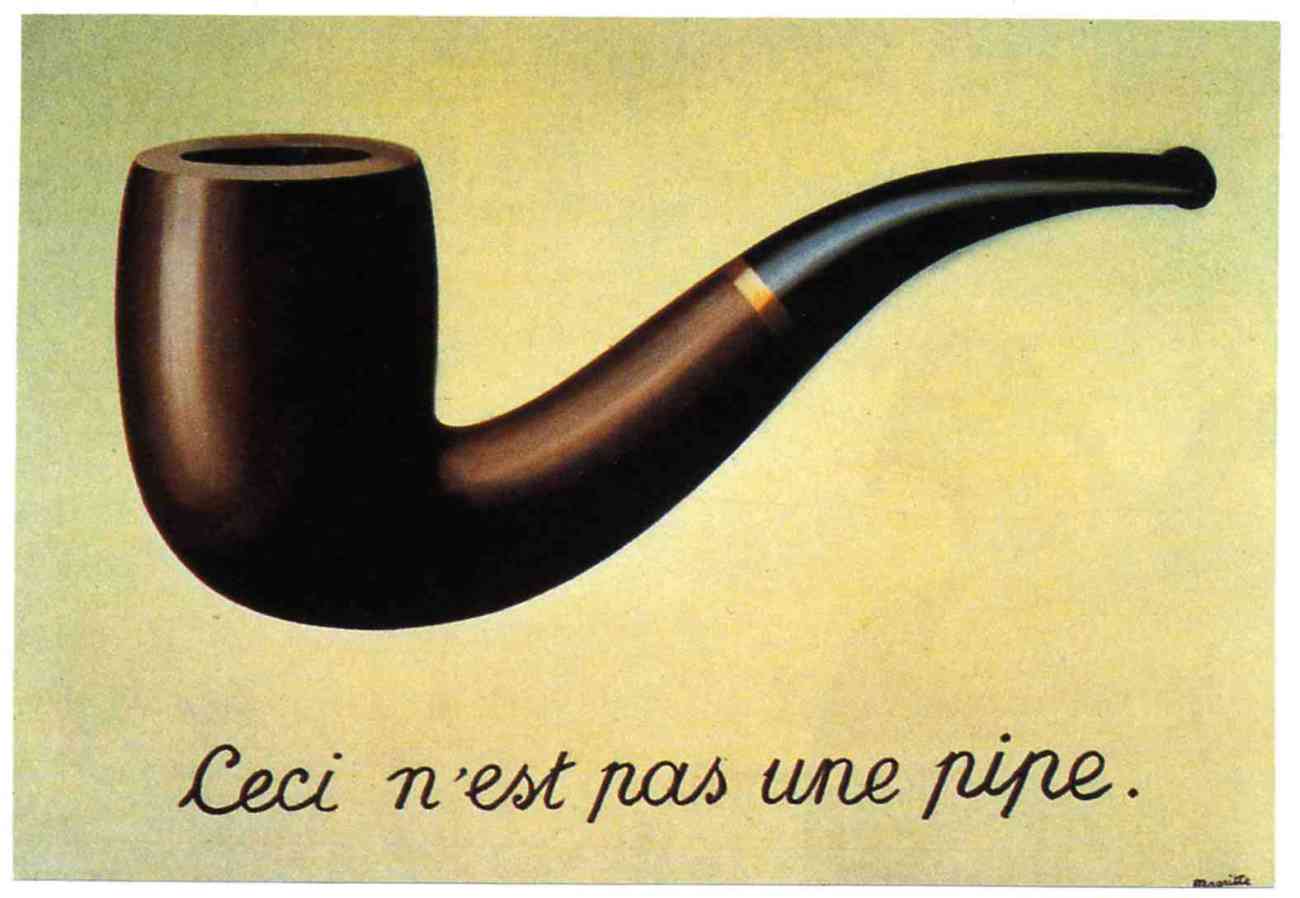
Ceci n'est pas une pipe

R. MAGRITTE, La trahison des images, 1928-29, huile sur toile, Los Angeles county Museum of Art, Los Angeles

                “ An unexamined life is a life not worth living ,” Socrates.

In my Forbidden Books course, we were assigned to develop characters to participate in a Socratic dialogue and record our dialogue on video. In our dialogue, one character is confronted with a dilemma of a philosophical nature. The Socratic Method is based on asking and answering questions that stimulate critical thinking and clarify ideas. This method was invented by Socrates,  an ancient greek philosopher who is known as the father of western philosophy.  
Each students was assigned a theme such as beauty, justice, or love and was instructed to write a socratic dialogue examining the meaning of theme assigned to them. My theme is reality.


Morpheus - played by AJ
Phaedrus -  played by GN


Script:
Morpheus: Hello Phaedrus, how are you today? (Sitting on the courtyard steps.)

Phaedrus: I’m fine, but I am trying to figure something out.

Morpheus: What are you trying to figure out? It seems to me that you have been thinking deeply about something.

Phaedrus: Well, I have been wondering whether you are really there, or if everything I see and do is just in my imagination! Are there really other people, and places, and things to eat, or are they just figments of my imagination? I certainly hope I am real! But it’s a good question. Before we can answer it, though, I think we need to ask, what is reality, and how can we decide whether something is real?

Morpheus: Reality is reality! It is anything that would still be here if there were no one around to experience it.

Phaedrus: Are you implying that we humans do not exist? Are language, consciousness and ideas real? If they are, we must be real, because none of these things would exist without us.

Morpheus: All I know is that we are not simply figments of our imagination. Reality is anything you can touch, see, smell and feel. Something is real if everyone can experience it.

Phaedrus: What about paintings? The tableau itself abides by your definition of reality, but is the image represented on the tableau real? Everyone is able to see, touch and feel the image!

Morpheus: The actual painting is real, but the image represented on it is not.

Phaedrus: Then, what is the difference between a representation of something and the real thing?

Morpheus: A real thing exists in space. It occupies a space.

Phaedrus: Really? What about a mirage?

Morpheus: Mirages are different, they are optical illusions caused by atmospheric conditions. They do not occupy space!

Phaedrus: You are right. Mirages are optical illusions caused by atmospheric conditions. They occur when light rays are refracted and form a false image at the observer’s location. Have you ever heard of Descartes?

Morpheus: Yes. Descartes was a French philosopher and mathematician. He is best known for his philosophical statement saying: “ Je pense, donc je suis; I think therefore I am.”

Phaedrus: Do you agree with that proposition?

Morpheus: I do. Descartes used that proposition to prove that the world exists.

Phaedrus: Is a chair real? A chair cannot think, from my experience. We may be able to think, but how do we know whether or not those ideas are actually ours? And what if someone planted those ideas in our brains, are those ideas still ours? Maybe our brain are pre-programmed, like a robot.

Morpheus: You are right! I cannot answer those question. I was blinded by my own beliefs, and was unable to examine them. You have taught me something. I need to start questioning my beliefs, so that I may defend them better (He said stoutly). You made a great vindication of your ideas.

Sunday, January 19, 2014

The Killer and Crippler - Disease

In my Disease course, we were assigned to research and illustrate the anatomy of our chosen disease, and create a patient profile. My patient profile is a fictional story about a women suffering from polio. The purpose of this action project was to allow our audience to experience what it is like to have polio. I learned about the different effects the polio virus has on the various systems of the body.

Below is my patient story and my illustration:


GN, 2014, Chicago

GN, 2014, Chicago


GN, 2014, Chicago


On the night of November 15, 1950, Melissa, a twenty year old Cape Fear Cotton Mill worker from Fayetteville North Carolina, went to bed with a fever. “This wasn't just any fever,” she would later recall, “My body temperature kept elevating throughout the week.”


Something had been incredibly wrong for nearly a week. Melissa slept sporadically for ten or twelve hours a day. She imaged many causes to explain her symptoms – overwork, flu.

By late November, Melissa an ebullient, gregarious, goal-driven, and energetic women, was exhausted and could barely stand up straight. Melissa felt overwhelmingly tired.

She had been having a little cold, but in November 30, 1950 she began to have trouble breathing and was rushed to the Hospital in Fayetteville. A diagnosis was made, via spinal tap, of Bulgar polio.


She was then whisked away to an isolation ward accepting polio patients. Outside her room, frantic activities took place outside her room. Doctors and nurses were moving about collecting data and writing reports. As she looked from her hospital bed all she saw were dull clouds covering the city. She was quickly placed in a machine designed to do the work of paralyzed muscles. Even with the support of the mechanical “caregiver,” Melissa was succumbing to polio. She was whisked to the operating room for an immediate tracheotomy, which helped with breathing. Melissa was given antibiotics and painkillers to reduce her muscle pain and to prevent her from contracting a urinary infection.


Melissa was puzzled by her diagnosis. She had always avoided public free places in fear of contracting this virus. “Polio is terrifying to experience, treat, and observe.” It is an infectious virus. It affects the autonomic nervous system, the part of the nervous system concerned with involuntary jobs, such as digestion, posture, breathing and many more.
The polio is an infectious virus is spread through fecal oral transmission.

It is a viral disease that occurs because of poor hygiene. “Polio is a killer and a crippler that prefers infants and children”. Separated from her family, Melissa endured grueling physical therapy. She faced months of arduous muscle therapy to strengthen weakened muscles in a large wards segregated by age and gender. “I experienced prejudice and discrimination seeking work.” Melissa experienced joint degeneration and skeletal deformities, such as spinal curvature.  


“Because of the poliovirus I would never raise a family or marry, I am a disgrace to my family.” Melissa is now living with post-polio syndrome and its distressing symptoms. Countries with high polio-virus circulation are Southeast Asia, Eastern Mediterranean, and Africa, third world countries. Post- Polio syndrome causes patients to have different symptoms, such as slowly progressive muscle weakening, generalized and muscular fatigue, and muscle atrophy. Post- polio syndrome interferes with an individual’s ability to independently function. Polio causes our respiratory muscles and swallowing muscles to weaken, which can result in troubles breathing and pneumonia (  Robbins, "The History of Polio Vaccine Development.)
Polio was the most feared disease of the twentieth century. It crippled around 35,000 people each year in United States (AMANDA KEHLER, “Poliomyelitis (infantile paralysis). There is no known cure for polio. Vaccination is the only prevention against poliomyelitis. 

Works Cited:


-          AMANDA KEHLER. "Poliomyelitis (infantile Paralysis)." Healthy Hippie. N.p., 26 July 2012. Web. 15 Jan. 2014. <http://www.healthyhippie.net/poliomyelitis-infantile-paralysis/>


-          "Poliomyelitis (infantile Paralysis, Polio)." Poliomyelitis (infantile Paralysis, Polio). N.p., Jan. 2012. Web. 15 Jan. 2014. <http://www.health.ny.gov/diseases/communicable/poliomyelitis/fact_sheet.htm>\
-          David Perlstein, MD, MBA, FAAP, Charles Patrick Davis, MD, PhD. "Polio Symptoms, Causes, Treatment - What Are Signs and Symptoms of Polio? - OnHealth."Onhealth. N.p., 16 Jan. 2014. Web. 20 Jan. 2014. <http://www.onhealth.com/polio/page2.htm>.
-          Paul, J. R. 1971. A History of Poliomyelitis. New Haven: Yale University Press.
-          Robbins, F. C. 1999. "The History of Polio Vaccine Development." In Vaccines, 3rd edition, ed. S. A. Plotkin and W. A. Orenstein. Philadelphia: Saunders.


-          Zuber, P. L. F. 2002. "Poliomyelitis." In Encyclopedia of Public Health, ed. L. Breslow, B. D. Goldstein, L. W. Green, et al., pp. 932-933. New York: Macmillan.